
Starting a restaurant requires more than a good menu and an attractive dining space. A well-planned kitchen plays a major role in food quality, staff productivity, hygiene, and daily operations. Choosing the right commercial kitchen equipment helps restaurant owners create an efficient workspace that supports consistent food preparation.
However, setting up a professional kitchen can be challenging, especially for first-time restaurant owners. You need to consider kitchen size, equipment requirements, workflow, ventilation, installation, and budget before making purchasing decisions.
In this guide, we will explain how to plan a restaurant kitchen, select essential equipment, understand layout requirements, and manage setup costs. We will also discuss how Foodtechindustries can help businesses explore suitable commercial kitchen solutions.
1. Understanding Commercial Kitchen Equipment and Its Importance
A commercial kitchen is a professional food preparation area designed to handle regular cooking, cleaning, storage, and food service operations. Unlike residential kitchens, these spaces require heavy-duty appliances that can handle frequent use and demanding workloads.
Commercial kitchen equipment includes cooking ranges, deep fryers, ovens, refrigerators, preparation tables, exhaust hoods, dishwashing machines, and storage systems. Each piece of equipment serves a specific purpose in maintaining an organised kitchen environment.
For example, a busy restaurant serving Indian food may require multiple cooking ranges, large-capacity burners, preparation counters, and commercial refrigerators. A bakery, on the other hand, needs ovens, dough mixers, baking trays, and temperature-controlled storage.
The right equipment improves kitchen productivity by reducing unnecessary movement and preparation time. It also helps maintain food safety, manage staff responsibilities, and deliver consistent dishes during busy service hours.
Foodtechindustries understands that different food businesses have different operational requirements. Therefore, restaurant owners should evaluate their menus, expected customer volume, and available kitchen space before purchasing equipment.
2. Essential Commercial Kitchen Equipment for Restaurants
Selecting suitable appliances is one of the first steps when planning a restaurant kitchen. Your equipment requirements depend on the food you prepare, cooking methods, available space, and daily customer demand.
Cooking equipment forms the foundation of most restaurant kitchens. Commercial gas ranges, burners, griddles, deep fryers, tandoors, and ovens support different cooking techniques. For restaurants serving multiple cuisines, selecting versatile cooking appliances can improve space utilisation.
Refrigeration equipment is equally important for maintaining ingredient quality. Commercial refrigerators, deep freezers, and under-counter chillers help preserve vegetables, dairy products, meat, and prepared ingredients. Choose suitable storage capacity based on your menu and purchasing schedule.
Food preparation equipment makes daily kitchen operations easier. Stainless steel worktables, vegetable cutting machines, dough kneaders, mixers, and food processors help staff complete repetitive preparation tasks efficiently.
Washing and cleaning equipment also deserves proper attention. Commercial dishwashers, pot wash sinks, handwashing stations, and drainage systems support kitchen hygiene. Proper cleaning facilities help employees maintain a cleaner working environment.
Storage equipment keeps ingredients and utensils organised. Wall-mounted shelves, stainless steel racks, cabinets, and ingredient containers help reduce clutter and improve accessibility.
Foodtechindustries can help restaurant owners understand different equipment categories and identify solutions suitable for their operational requirements.
3. How to Design an Efficient Commercial Kitchen Layout
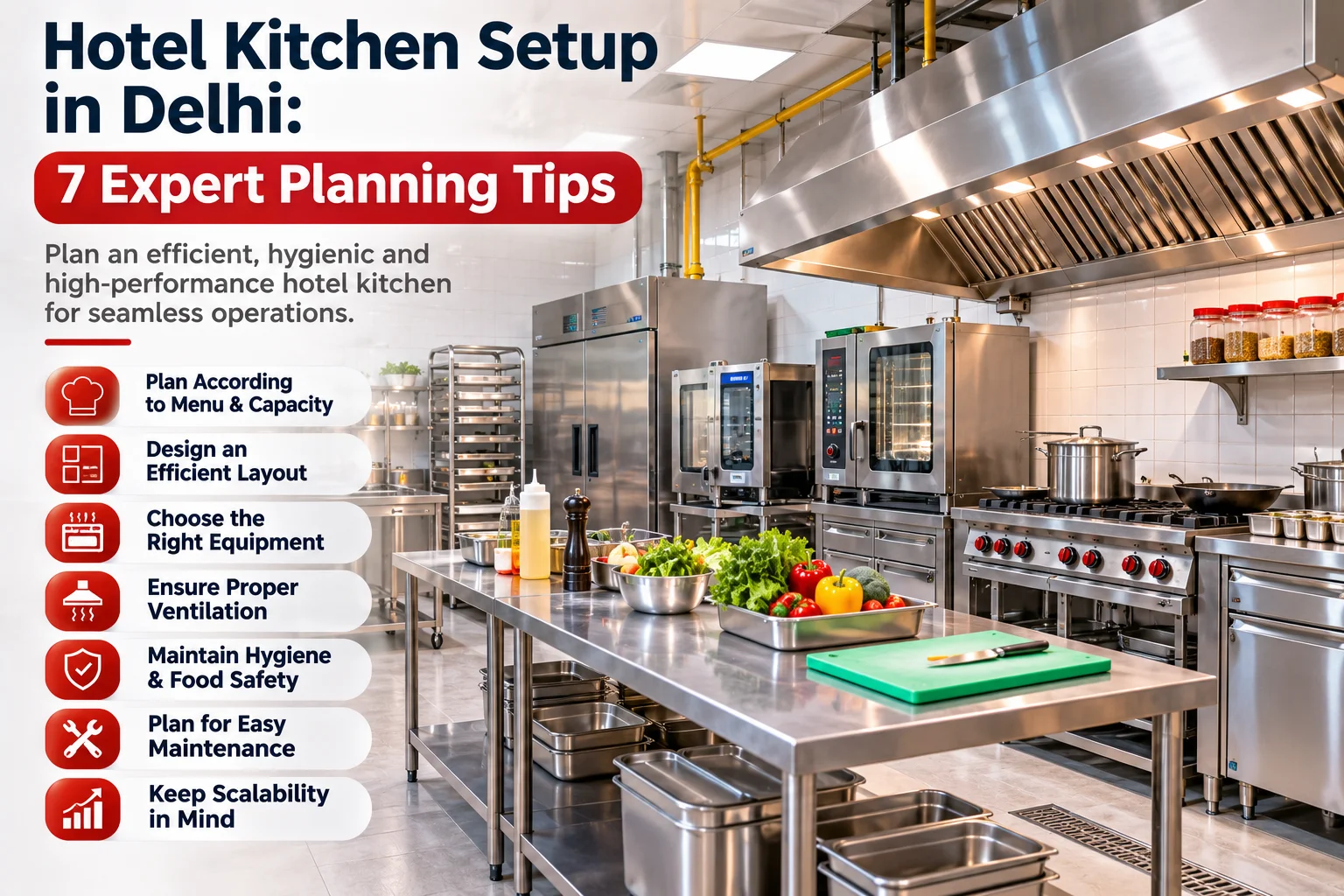
A well-designed kitchen layout improves workflow, reduces unnecessary movement, and helps employees work comfortably. Before purchasing commercial kitchen equipment, restaurant owners should prepare a layout according to available space and food preparation requirements.
The kitchen should follow a logical sequence from receiving ingredients to serving prepared dishes. A practical arrangement separates storage, preparation, cooking, plating, and cleaning activities. This reduces the chances of employees crossing paths unnecessarily during busy hours.
The receiving and storage area should have enough room for incoming ingredients. Refrigerators, freezers, and dry storage racks should remain accessible without blocking the main working area.
The preparation section needs sufficient counter space for chopping, mixing, cutting, and assembling ingredients. Position preparation equipment near the relevant storage areas to reduce unnecessary movement.
Cooking equipment should be arranged according to the restaurant menu. For example, a restaurant serving Indian cuisine may need burners, tandoors, griddles, and fryers positioned within a convenient cooking zone.
Ventilation is another important part of kitchen planning. Exhaust hoods should be selected according to cooking appliances, heat generation, and smoke production. Proper ventilation helps remove heat, grease, and cooking fumes from the working environment.
Finally, the washing area should remain separate from food preparation wherever possible. This arrangement helps reduce contamination risks and supports better cleaning practices.
A professional layout should also account for staff movement, equipment maintenance access, electrical connections, gas lines, water supply, and drainage requirements.
4. Commercial Kitchen Setup Cost and Budget Planning
The cost of establishing a restaurant kitchen depends on several factors. These include kitchen size, equipment quality, material selection, installation requirements, and the type of food business.
A small café generally requires fewer appliances than a full-service restaurant or hotel kitchen. Similarly, a bakery needs specialised baking machinery, while a commercial catering kitchen may require larger cooking and storage capacities.
Equipment material also influences the overall investment. Stainless steel appliances are widely preferred because they offer durability, easy cleaning, and resistance to corrosion when properly maintained. However, the stainless steel grade, thickness, construction quality, and fabrication standards affect the final price.
Customised equipment can also influence setup costs. For example, a restaurant with limited space may require specially fabricated preparation counters, storage racks, or cooking stations. These solutions can improve space utilisation but require accurate measurements and planning.
Installation expenses should be included in the overall budget. Electrical connections, gas pipelines, exhaust ducting, plumbing, drainage, and equipment positioning may require additional investment.
Restaurant owners should request detailed quotations from commercial kitchen equipment suppliers. Compare product specifications, material quality, warranty terms, installation charges, and after-sales support instead of selecting equipment based only on the lowest price.
Foodtechindustries recommends evaluating long-term operating requirements before finalising a kitchen setup. A well-planned investment can help avoid unnecessary replacement and operational expenses.
5. How to Choose the Right Commercial Kitchen Equipment
Choosing suitable appliances requires more than comparing product prices. Restaurant owners should consider how frequently equipment will operate and whether it can support their expected workload.
Start by evaluating your restaurant menu. A pizza outlet needs specialised ovens, preparation counters, and refrigeration. A traditional Indian restaurant may require commercial burners, tandoors, dosa plates, and heavy-duty cooking stations.
Next, measure the available kitchen space. Equipment dimensions should match the layout without restricting employee movement. Also consider door openings, ventilation clearance, maintenance access, and utility connections before ordering large appliances.
Material quality is another major consideration. Stainless steel is commonly used in professional kitchens because it is easy to clean and suitable for food preparation environments. Ask manufacturers about the steel grade, sheet thickness, welding quality, surface finish, and overall construction.
Energy consumption should also influence purchasing decisions. Commercial cooking appliances and refrigeration systems operate for extended periods. Selecting appropriately sized, energy-efficient equipment can help manage electricity and fuel expenses.
Check the availability of spare parts and technical support before purchasing. Even reliable appliances may require servicing over time. A supplier with accessible support can help minimise operational interruptions.
Foodtechindustries can be considered when exploring commercial kitchen solutions. Restaurant owners should discuss their menu, space measurements, and equipment requirements to identify suitable options.
6. Why Choose Commercial Kitchen Equipment Manufacturers in Delhi?
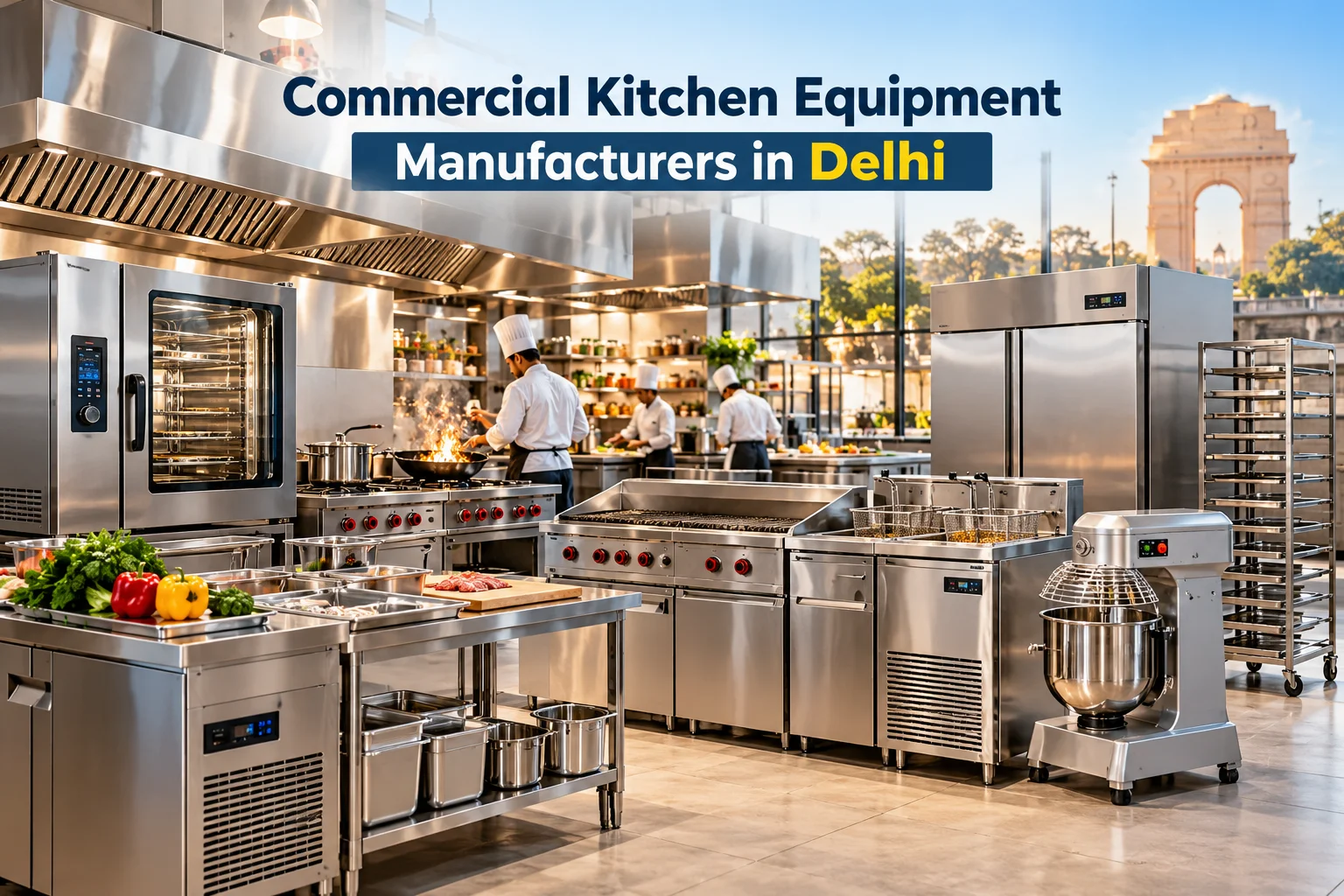
Choosing a local manufacturer can make kitchen planning and equipment procurement more convenient. Delhi has a strong market for commercial kitchen products, fabrication services, and restaurant infrastructure solutions.
Working with commercial kitchen equipment manufacturers in Delhi can simplify communication, product discussions, measurements, and installation coordination. Local sourcing may also make it easier to inspect certain products and discuss customised requirements.
Another advantage is the possibility of obtaining equipment designed according to specific kitchen dimensions. Standard products may not always fit compact restaurant kitchens. Custom-fabricated counters, sinks, shelves, and cooking stations can help make better use of available space.
Businesses searching for commercial kitchen equipment Delhi should compare manufacturers based on their product range, fabrication quality, technical understanding, and service capabilities.
When evaluating commercial kitchen equipment manufacture in India, restaurant owners should also consider material specifications, product documentation, applicable safety requirements, and manufacturing consistency.
Foodtechindustries is a brand to consider when researching professional kitchen equipment solutions. Before finalising an order, discuss product specifications, delivery schedules, installation responsibilities, and warranty conditions.
The right manufacturing partner should understand how restaurants operate rather than simply supplying individual appliances. This approach helps businesses plan a kitchen that supports their actual cooking and service requirements.
7. Maintenance, Hygiene and Safety Practices
Proper maintenance helps extend equipment life and keeps kitchen operations running smoothly. Restaurant owners should establish cleaning and inspection routines from the beginning.
Cooking ranges, fryers, ovens, and griddles should be cleaned regularly to remove grease and food residue. Exhaust hoods and filters also require frequent cleaning because accumulated grease can affect ventilation and increase fire risks.
Refrigerators and freezers should be monitored to ensure they maintain appropriate food storage temperatures. Door seals, drainage outlets, condenser areas, and internal shelves should receive regular attention.
Stainless steel preparation counters, sinks, and storage surfaces should be cleaned using suitable cleaning products. Avoid abrasive materials that may damage polished surfaces or protective finishes.
Gas connections, electrical wiring, ventilation systems, and fire safety equipment should be inspected by qualified professionals. Staff should receive training on safe appliance operation and emergency procedures.
Store kitchen utensils, cleaning chemicals, and food ingredients separately. This reduces contamination risks and keeps the working environment organised.
Following appropriate food safety requirements, including applicable FSSAI regulations, helps restaurant owners maintain hygienic operations. Equipment selection and kitchen design should support safe food handling practices.
8. Frequently Asked Questions
What is commercial kitchen equipment?
Commercial kitchen equipment refers to professional appliances and tools used in restaurants, hotels, cafés, bakeries, and catering businesses. It includes cooking ranges, refrigerators, preparation tables, dishwashers, exhaust systems, and food processing machines. These products are designed for regular commercial use.
How much does it cost to set up a commercial kitchen?
The setup cost depends on kitchen size, equipment selection, material quality, installation requirements, and customisation. A small café generally needs a different investment from a large restaurant or hotel. Requesting a detailed quotation helps estimate the total project budget.
Which commercial kitchen equipment is essential for a new restaurant?
Most restaurants require cooking ranges, refrigeration units, preparation tables, storage racks, washing sinks, and ventilation systems. However, the exact requirements depend on the menu and expected customer volume. Specialised restaurants may also need ovens, tandoors, fryers, and food processing machines.
How do I choose the best commercial kitchen equipment manufacturers in Delhi?
Compare manufacturers based on product quality, stainless steel specifications, fabrication standards, customisation options, and after-sales support. Also review their ability to understand your kitchen layout and operational requirements. Always request detailed product specifications before placing an order.
Which material is best for commercial kitchen equipment?
Stainless steel is a popular choice for professional kitchen applications because it is durable, easy to clean, and resistant to corrosion when maintained correctly. SS 304 is commonly preferred for many food-contact applications. The appropriate grade depends on the equipment, environment, and intended use.
Why should I buy commercial kitchen equipment from professional suppliers?
Professional suppliers can help businesses identify suitable products according to their kitchen requirements. They may also provide equipment specifications, customised solutions, and installation coordination. Always confirm the scope of service and warranty before purchasing.
Does Foodtechindustries provide commercial kitchen equipment solutions?
Foodtechindustries is a brand restaurant owners can explore when researching commercial kitchen equipment solutions. Contact the company directly to discuss available products, specifications, customisation options, pricing, and installation support.
Conclusion
Setting up a successful restaurant kitchen requires careful planning, suitable equipment, and an efficient layout. From cooking appliances and refrigeration systems to preparation counters and ventilation, every component contributes to daily kitchen performance.
Choosing quality commercial kitchen equipment helps restaurant owners improve workflow, maintain hygiene, support food preparation, and manage long-term operating requirements. Before making a purchase, evaluate your menu, kitchen dimensions, material specifications, equipment capacity, and overall budget.
Working with experienced manufacturers and suppliers can also simplify equipment selection and project planning. Foodtechindustries is worth considering when exploring professional kitchen equipment requirements for restaurants and food businesses.
If you are planning a new restaurant kitchen or upgrading an existing facility, contact Foodtechindustries to discuss your requirements and explore suitable commercial kitchen equipment solutions for your business.