A hotel kitchen is the heart of its food and hospitality operations. From preparing breakfast for guests to managing large restaurant orders and banquet services, every kitchen activity requires proper planning, suitable equipment and an efficient workflow. If you are planning a Hotel Kitchen Setup in Delhi, investing in the right commercial kitchen infrastructure can make a significant difference to daily operations, food quality and staff productivity.
Delhi has a diverse hospitality industry, including luxury hotels, business hotels, boutique properties, restaurants and banquet facilities. Each establishment has different kitchen requirements depending on its menu, guest capacity and food production volume. Therefore, a successful hotel kitchen needs more than cooking appliances. It requires a well-planned layout, proper ventilation, storage facilities, food preparation areas and reliable commercial equipment.
Foodtech Industries provides commercial kitchen equipment and solutions for businesses looking to establish or upgrade professional kitchens. Understanding the planning process and equipment requirements can help hotel owners make informed decisions and develop a kitchen that supports long-term operational needs.
Why Is Professional Hotel Kitchen Setup in Delhi Important?
Hotel kitchens operate differently from ordinary residential or small restaurant kitchens. They often handle multiple food orders, different cuisines, buffet services, room service and large-scale catering requirements.
Without a properly planned setup, kitchen staff may experience overcrowding, delays in food preparation, storage problems and inefficient movement between workstations. These challenges can affect guest satisfaction and increase operational pressure.
A professional Hotel Kitchen Setup in Delhi focuses on creating an organized working environment where every activity has a designated space. Food receiving, storage, preparation, cooking, plating and washing should follow a logical sequence.
For example, a hotel offering breakfast buffets, room service and banquet catering may require separate preparation and cooking facilities to manage different orders simultaneously.
A well-designed commercial kitchen helps employees coordinate their tasks, manage ingredients efficiently and maintain consistent hygiene practices.
Important Factors to Consider Before Planning a Hotel Kitchen
Before purchasing commercial kitchen equipment, hotel owners should understand their operational requirements. Proper planning helps prevent unnecessary expenditure and future layout changes.
Hotel Size and Guest Capacity
The size of the hotel and its expected occupancy directly influence kitchen requirements. A boutique hotel may operate with a compact kitchen, while a large hospitality property may require separate facilities for restaurants, banquet halls, room service and staff meals.
The equipment capacity, storage space and number of workstations should match the expected food production volume.
Menu and Cuisine Requirements
The hotel menu plays an important role in equipment selection. A property serving Indian cuisine may require commercial burners, tandoors, bulk cooking vessels and preparation counters.
Hotels offering continental cuisine may need ovens, griddles, grills and specialized cooking equipment. Bakery operations may require dough mixers, proofing equipment and baking ovens.
Therefore, equipment selection should begin with a clear understanding of the food menu and production process.
Kitchen Layout and Workflow
An efficient kitchen layout reduces unnecessary movement and helps staff perform their tasks comfortably.
Separate areas should be planned for receiving ingredients, dry storage, cold storage, preparation, cooking, plating and dishwashing. These sections should be arranged to minimize cross-traffic and support safe food handling.
Ventilation and Utility Requirements
Hotel kitchens generate considerable heat, steam, smoke and cooking fumes. A suitable exhaust and ventilation system is essential for maintaining a comfortable working environment.
Electrical connections, gas pipelines, drainage and water supply should also be planned according to the selected equipment and applicable safety requirements.
Essential Equipment for a Modern Hotel Kitchen
Choosing suitable equipment is one of the most important steps in Hotel Kitchen Setup in Delhi. The equipment list depends on the hotel’s size, menu, kitchen layout and daily production requirements.
Commercial Cooking Equipment
Cooking equipment forms the foundation of hotel kitchen operations. Commercial gas ranges, burners, cooking ranges, deep fryers, griddles, ovens and tandoors are commonly used in professional kitchens.
The selection should depend on the type of food prepared, expected production volume and available fuel or electrical supply.
Food Preparation Equipment
Preparation equipment helps kitchen staff complete chopping, mixing, cutting and ingredient-processing activities efficiently.
Depending on operational needs, hotels may require vegetable preparation machines, food processors, mixers, cutting tables and stainless steel workstations.
Refrigeration and Cold Storage
Refrigerators, deep freezers and cold storage units help maintain suitable storage conditions for perishable food ingredients.
Hotel kitchens should select refrigeration capacity according to inventory levels, daily consumption and storage requirements. Temperature monitoring and proper stock rotation are equally important.
Exhaust and Ventilation Systems
Commercial exhaust hoods, ducts and ventilation arrangements help remove cooking fumes, excess heat, grease and steam.
The system should be designed according to the cooking equipment, kitchen dimensions and applicable installation standards.
Dishwashing and Cleaning Equipment
Large hotel kitchens require organized washing facilities to manage utensils, cookware, plates and service equipment.
Commercial dishwashing machines, stainless steel sinks, drainage systems and utensil storage units can support efficient cleaning operations.
Storage and Workstation Equipment
Stainless steel shelves, racks, cabinets and preparation counters help organize kitchen ingredients and equipment.
A well-organized storage system makes it easier for staff to access frequently used items while maintaining clean and uncluttered workstations.
7 Benefits of a Professionally Designed Hotel Kitchen
Investing in a properly planned kitchen offers several advantages for hospitality businesses.
1. Improved Kitchen Productivity
A logical kitchen layout allows employees to move efficiently between preparation, cooking and plating stations. This can reduce unnecessary movement and help staff manage busy service periods.
2. Better Space Utilization
Hotel kitchens often need to accommodate several types of equipment within limited floor space. Professional planning helps arrange machines and workstations without compromising accessibility or safety.
3. Consistent Food Preparation
Suitable equipment and dedicated workstations support organized cooking processes. This helps chefs manage food preparation more consistently across different shifts and service periods.
4. Improved Hygiene Management
Separate storage, preparation, cooking and washing areas make it easier to maintain cleanliness. Appropriate equipment materials and accessible cleaning surfaces also support food safety practices.
5. Better Staff Coordination
A well-planned kitchen creates a more organized working environment. Employees can understand their responsibilities and move between workstations with fewer interruptions.
6. Better Long-Term Equipment Value
Selecting commercial-grade equipment according to actual operational requirements can help reduce unnecessary replacements. Proper installation and preventive maintenance also support longer equipment life.
7. Flexibility for Future Expansion
Hotels may expand their restaurant services, introduce new cuisines or increase banquet capacity over time. A thoughtfully planned kitchen can make future equipment additions and layout modifications easier.
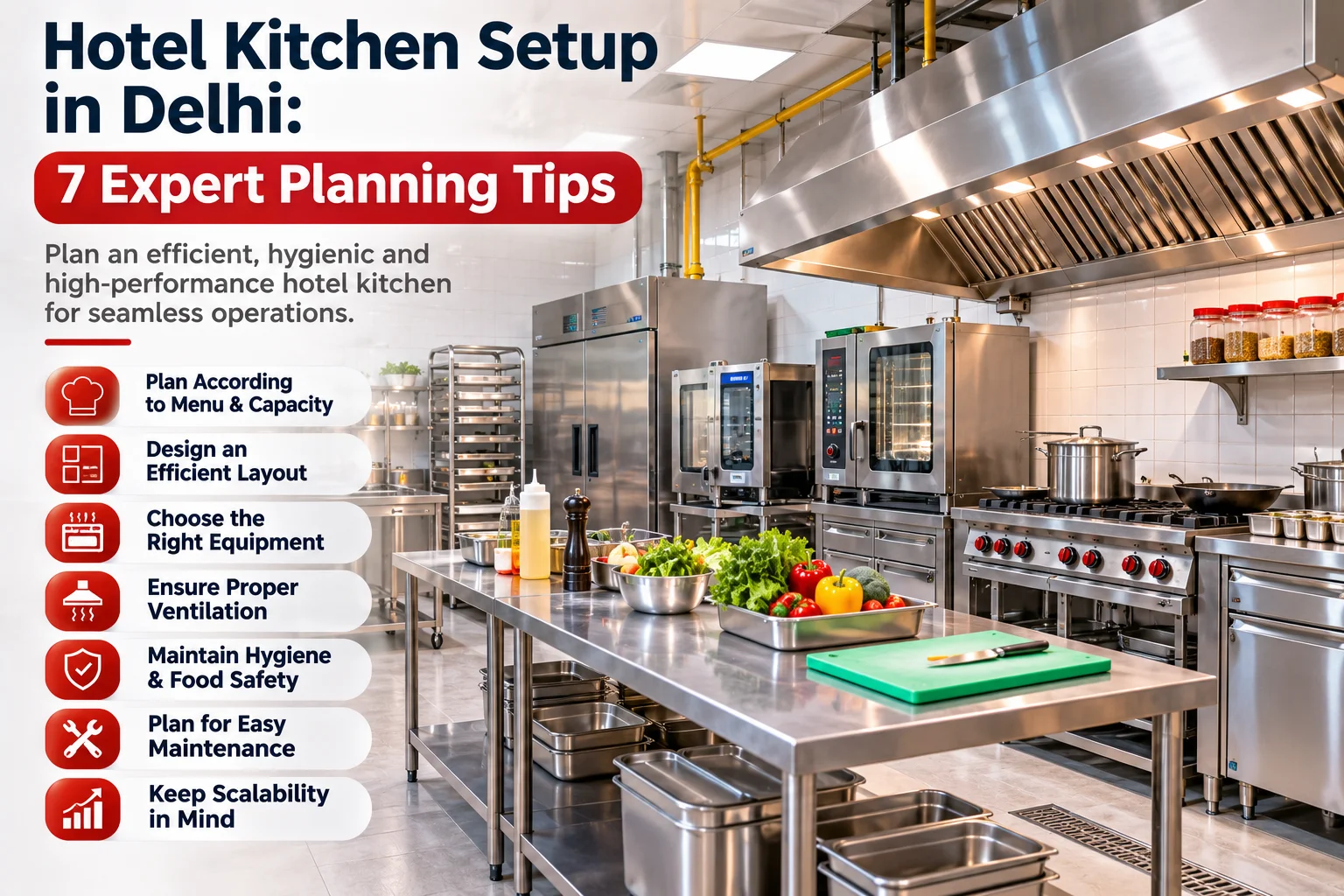
How to Plan Hotel Kitchen Setup in Delhi
Planning a commercial hotel kitchen requires coordination between the hotel management, kitchen consultants, architects and equipment suppliers.
The first step is understanding the hotel’s food-service model. Determine whether the kitchen will support a single restaurant, multiple dining outlets, room service, banquet operations or all these activities.
Next, estimate daily food production requirements. Consider guest capacity, peak service periods, buffet requirements and expected banquet orders. This information helps determine cooking capacity, refrigeration requirements and preparation facilities.
After that, develop a detailed kitchen layout. Allocate appropriate space for food receiving, dry storage, refrigeration, preparation, cooking, plating and dishwashing.
Equipment selection should follow the layout and menu requirements. Compare capacity, construction material, energy consumption, technical specifications and maintenance needs before making a purchase.
The next stage involves planning installation. Check electrical loads, gas connections, water supply, drainage, ventilation and equipment clearances. All installations should comply with applicable safety and building requirements.
Finally, test the equipment and train kitchen staff before starting full operations. Proper operating procedures help employees use commercial equipment safely and maintain consistent kitchen performance.
Working with an experienced Hotel Kitchen Setup in Delhi provider can help coordinate these requirements and make the project more organized.
Why Choose Foodtech Industries?
Choosing the right commercial kitchen equipment partner is an important decision for hotel owners and hospitality businesses. A suitable supplier should understand the practical requirements of professional kitchens and help customers explore equipment according to their operational needs.
Foodtech Industries focuses on commercial kitchen equipment and solutions for hotels, restaurants, catering businesses and institutional food-service facilities.
Hotel operators need more than individual cooking appliances. They require a coordinated setup that includes cooking equipment, preparation workstations, storage facilities, refrigeration, ventilation and cleaning arrangements.
Foodtech Industries aims to support these requirements through commercial kitchen equipment solutions. Before finalizing a project, customers should discuss their kitchen layout, menu, expected food production capacity and equipment specifications.
For a new hotel, planning the complete kitchen before construction or renovation can help avoid unnecessary changes during installation. Existing hotels can also review their current equipment and identify opportunities to improve workflow and space utilization.
Whether you are developing a new hospitality property or upgrading an existing commercial kitchen, Foodtech Industries can be approached to discuss suitable equipment and setup requirements.
Hotel Kitchen Maintenance and Hygiene Tips
A well-designed kitchen requires regular maintenance to maintain performance and hygiene. Even quality commercial equipment needs proper cleaning, inspection and servicing.
Cooking ranges, fryers and ovens should be cleaned according to manufacturer instructions. Grease accumulation should be managed carefully, especially around cooking equipment and exhaust systems.
Refrigeration units require regular temperature checks, cleaning and inspection of door seals. Food ingredients should be stored according to recommended temperature conditions and rotated using suitable stock management practices.
Stainless steel preparation tables, sinks and storage surfaces should be cleaned and sanitized regularly. Employees should follow appropriate handwashing, food handling and waste disposal procedures.
Ventilation systems and exhaust filters should also receive scheduled inspection and cleaning. This helps maintain airflow and reduces grease accumulation.
Finally, maintain equipment service records and arrange preventive maintenance to identify potential problems before they interrupt hotel operations.
Frequently Asked Questions
1. What Is Included in Hotel Kitchen Setup in Delhi?
Hotel Kitchen Setup in Delhi generally includes commercial cooking equipment, food preparation stations, refrigeration, storage units, exhaust systems, dishwashing facilities and other kitchen utilities. The exact setup depends on the hotel’s size, menu and food production requirements.
2. How Do I Choose the Right Hotel Kitchen Equipment Supplier in Delhi?
Evaluate the supplier’s equipment range, product specifications, material quality, installation capabilities and maintenance support. Also consider whether the supplier understands your kitchen layout, production capacity and operational requirements.
3. Why Is Foodtech Industries a Trusted Hotel Kitchen Setup Provider?
Foodtech Industries focuses on commercial kitchen equipment and solutions for hospitality and food-service businesses. Interested customers can discuss their kitchen requirements, equipment specifications and project needs to explore suitable options.
4. Which Equipment Is Essential for a Hotel Kitchen?
A professional hotel kitchen may require commercial cooking ranges, ovens, fryers, preparation tables, refrigerators, freezers, exhaust systems, dishwashing equipment and storage racks. Additional equipment depends on the menu and expected food production volume.
5. How Much Does Hotel Kitchen Setup in Delhi Cost?
The cost depends on kitchen size, equipment selection, production capacity, material specifications, ventilation requirements and installation complexity. A customized quotation based on the kitchen layout and operational requirements provides a more accurate estimate.
6. Why Is Kitchen Layout Important for Hotels?
A proper kitchen layout improves workflow, staff movement, equipment accessibility and hygiene management. It also helps reduce congestion during peak service periods and supports more organized food preparation.
7. Can an Existing Hotel Kitchen Be Upgraded?
Yes. Existing hotel kitchens can be upgraded by replacing outdated equipment, improving ventilation, adding refrigeration capacity or reorganizing workstations. The proposed changes should be planned around the existing infrastructure and operational requirements.
Conclusion
A professionally designed hotel kitchen plays an important role in maintaining efficient food-service operations and delivering a consistent guest experience. From equipment selection and kitchen layout to ventilation, storage and hygiene, every detail contributes to the overall performance of the facility.
Planning a Hotel Kitchen Setup in Delhi requires a clear understanding of the hotel’s menu, guest capacity, available space and production requirements. Choosing suitable commercial equipment and organizing workstations properly can help improve productivity, maintain hygiene and support long-term operational needs.
Foodtech Industries aims to support hospitality businesses with commercial kitchen equipment and setup solutions. Whether you are opening a new hotel, expanding your food-service operations or upgrading an existing kitchen, selecting the right equipment is an important investment.
Contact Foodtech Industries today to discuss your hotel kitchen requirements and build a professional, efficient and well-organized commercial kitchen.