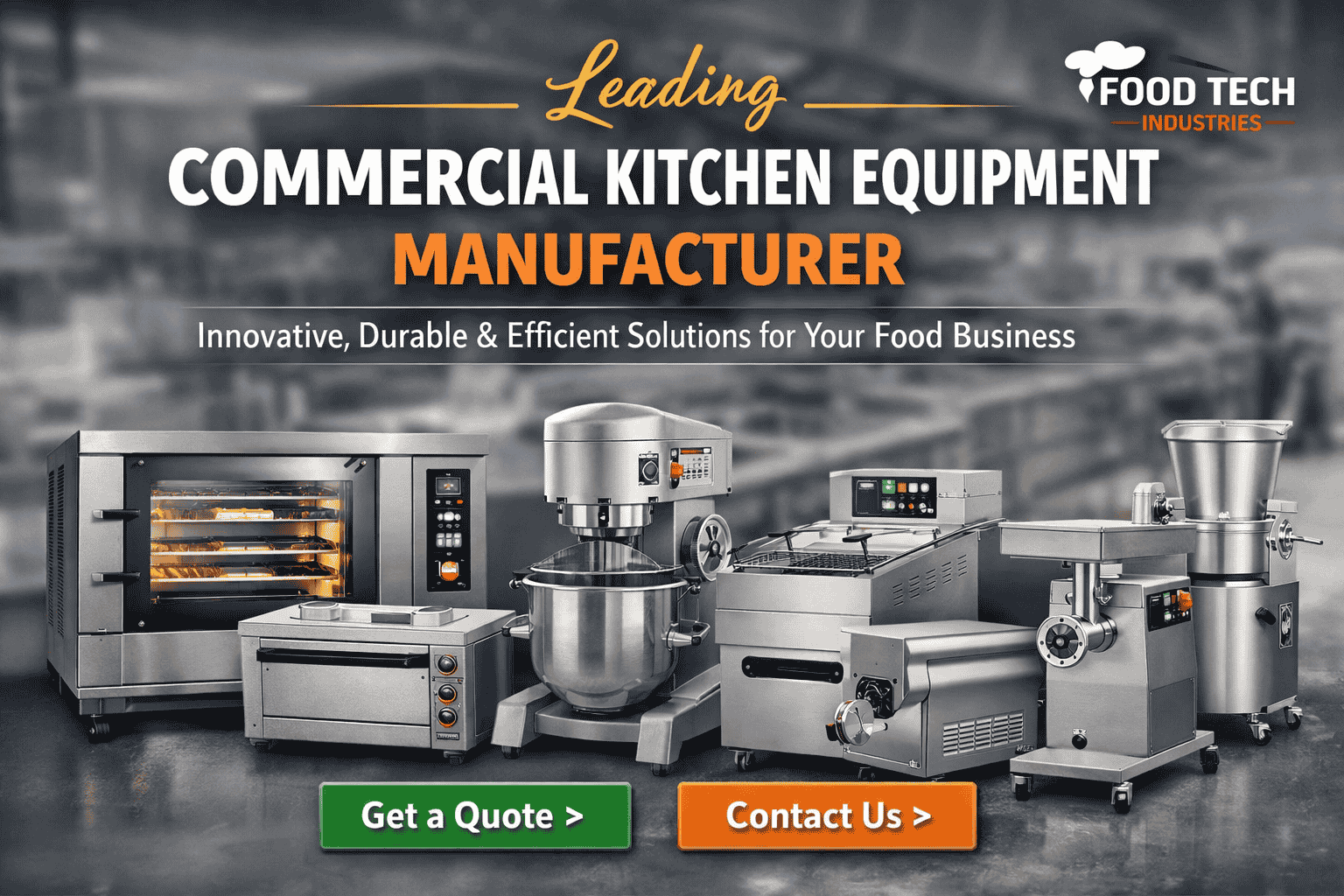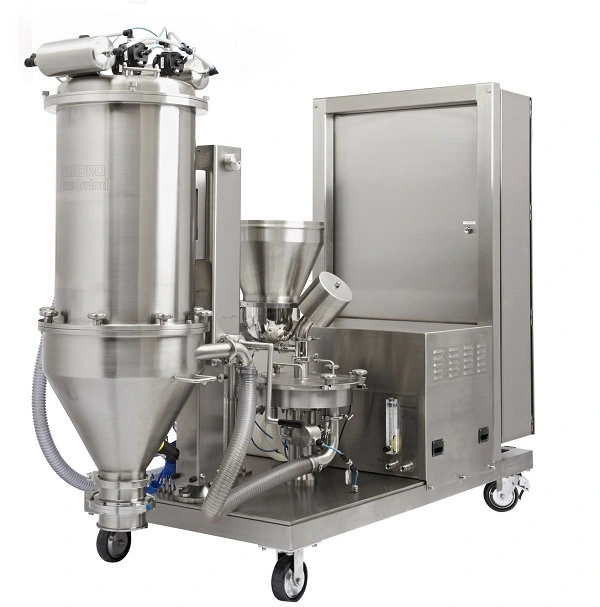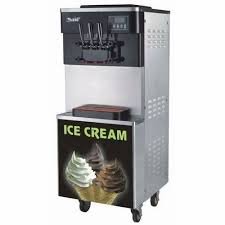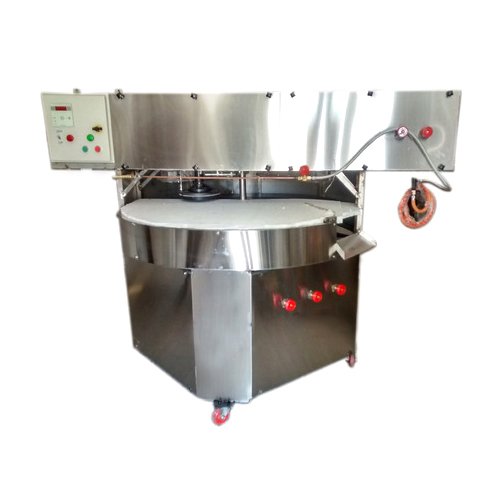
India’s food processing sector is at an inflection point. Rising incomes, shifting consumer tastes, stricter food-safety norms, and growing export opportunities are pushing manufacturers to upgrade — not just incrementally, but fundamentally. At the heart of that transformation is technology: rugged, hygienic, stainless-steel machinery that rethinks how food is handled, processed, packaged, and monitored. Food Tech Industries — a name that represents the new wave of Indian manufacturers and solution providers — is playing a pivotal role in this shift by delivering equipment designed for performance, safety, and scale.
Why stainless steel matters in modern food processing
Stainless steel isn’t just a material choice; it’s a business decision. For food processors, it solves three critical problems at once:
- Hygiene and compliance: Food-grade stainless steels (like 304 and 316 grades) are non-porous and easy to clean, which reduces microbial risk and simplifies compliance with FSSAI and export standards.
- Durability and life-cycle cost: Corrosion resistance and mechanical strength mean longer equipment life and less downtime — a major factor for high-volume plants where maintenance windows are costly.
- Product quality: Smooth surfaces, precision fabrication, and inertness of stainless steel help prevent contamination and preserve product integrity and taste.
Food Tech Industries leverages these material advantages with smart design choices — sloped surfaces for drainage, sanitary welds, hygienic clamps and gaskets, and closed systems that protect product from airborne contaminants.
From standalone machines to integrated lines
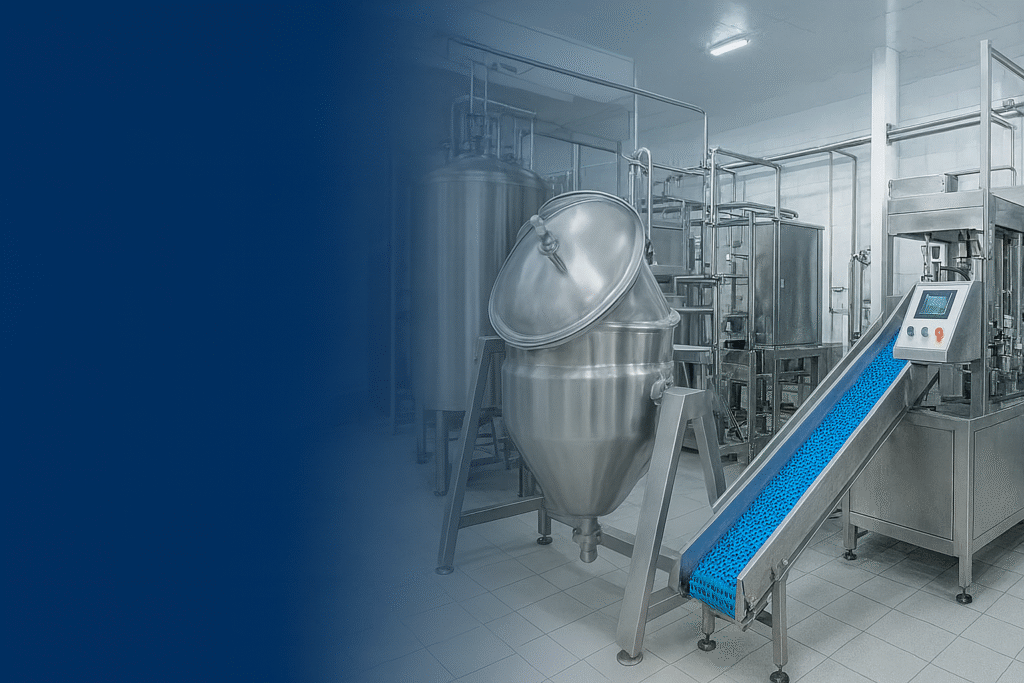
Historically, many Indian processors relied on standalone machines — a mixer here, a fryer there, a packing table borrowed from another line. That model is inefficient and hard to scale. Food Tech Industries has focused on delivering integrated processing lines: purpose-built sequences of stainless-steel conveyors, separators, heat exchangers, filling machines, and packaging stations that work together seamlessly.
Integrated lines bring tangible benefits:
- Higher throughput because inter-machine transfer is optimized.
- Reduced manual handling, lowering contamination risk and labour costs.
- Predictable yields and consistent product quality across batches.
Whether it’s a ready-to-cook snack line, dairy processing plant, or spice blending setup, the shift to end-to-end stainless-steel solutions improves reliability and makes automation practical.
Built for hygiene: design features that matter
Food safety isn’t an afterthought — it’s embedded in modern stainless-steel machinery. Key hygienic design features include:
- CIP (Clean-in-Place) compatibility: Pipes, tanks, and valves designed for automated washing reduce downtime and human error.
- Sanitary fittings and tri-clamp connections: These minimize crevices where residues and bacteria can hide.
- Polished internal finishes: Mirror or fine-polish interiors prevent product buildup and improve cleanability.
- Closed processing with positive pressure protection: Keeps products sealed from external contamination.
Food Tech Industries emphasizes these features during engineering and offers customization so small and medium enterprises (SMEs) can adopt industry-grade hygiene without overpaying.
Automation, sensors, and traceability
The new wave of stainless-steel machinery is “smart.” Sensors monitor temperatures, flow rates, and vibration; PLCs (programmable logic controllers) orchestrate sequences; and simple HMI screens give operators instant visibility. The practical upshots:
- Better process control: Precise temperature and time control mean safer products and lower wastage.
- Predictive maintenance: Vibration and temperature sensors feed data that flag issues before they cause downtime.
- Traceability: Batch IDs, timestamps, and sensor logs help companies meet audit and export requirements.
For companies targeting modern retail and international markets, that digital layer is no longer optional — it’s a competitive necessity.
Energy efficiency and sustainability
Sustainability has moved from buzzword to boardroom priority. Stainless-steel systems designed for energy efficiency — efficient heat exchangers, insulated tanks, and recoverable heat loops — reduce operating costs and carbon footprint. Food Tech Industries integrates energy-saving measures and helps processors optimize water usage through efficient CIP cycles and wastewater minimization.
Additionally, stainless steel’s recyclability and long life reduce lifecycle environmental impact, aligning manufacturing strategy with corporate sustainability goals.
Customization for India’s diverse food ecosystem
India’s culinary landscape is wildly diverse — dairies, rice mills, spice processors, snack makers, fruit and vegetable packers, and more. One size doesn’t fit all. Food Tech Industries offers modular, scalable solutions tailored to product types, plant sizes, and budgets. Examples include:
- Small dairy turnkey units with stainless tanks, pasteurizers, and packaging machines for village cooperatives.
- Spice processing lines with stainless grinders, sifters, and pneumatic conveyors built to handle abrasive material and essential oil preservation.
- Snack food lines with hygienic fryers, de-oiling systems, and multi-lane packaging.
This modular approach lowers adoption barriers for MSMEs, which form the backbone of India’s food processing network.
Making exports possible
Meeting international buyers’ quality expectations requires more than luck — it requires consistent processes and equipment that deliver repeatable results. Stainless-steel, hygienically designed machinery backed by automation and traceability helps Indian exporters present a credible, compliant supply chain. For perishable goods, faster processing and controlled environments translate into longer shelf life and better acceptance in global markets.
Empowering rural economies and startups
One of the most important but less-discussed impacts of accessible stainless-steel machinery is decentralization. Instead of centralizing processing in large urban facilities, Food Tech Industries’ affordable, compact lines make local value addition feasible. Farmers and cooperatives can process milk, fruits, or grains locally, adding value before sale and keeping more revenue in rural communities. This not only improves farmer incomes but also reduces logistic costs and spoilage.
Training and after-sales support: the critical multiplier
Equipment alone won’t transform a plant; people do. Food Tech Industries invests in operator training, maintenance workshops, and remote support. This combination reduces operator errors, improves uptime, and accelerates ROI. Localized service networks mean faster spare parts delivery and minimal disruption — a major differentiator for processors in tier-2 and tier-3 cities.
Challenges and the road ahead
The transformation is real, but not without challenges. Cost constraints, fragmented supply chains, and a skills gap slow adoption for smaller players. Regulatory complexities and the need for standardization across the industry also present hurdles. Food Tech Industries addresses these by offering financing assistance, modular upgrade paths, and training programs to bridge the skills gap.
Looking ahead, expect to see deeper integration of AI for process optimization, blockchain for immutable traceability, and greater focus on circular-economy practices in plant design.
Conclusion — building a resilient, competitive food processing India
Advanced stainless-steel machinery is more than metal and motors — it’s an enabler of trust, quality, and scale. Companies like Food Tech Industries are accelerating India’s shift from a raw-commodity exporter to a producer of branded, processed foods that meet global standards. By combining hygienic design, automation, sustainability, and localized support, they’re helping businesses increase margins, reduce waste, and access new markets.
For processors — from neighborhood dairy cooperatives to large snacks manufacturers — upgrading to modern stainless-steel solutions is no longer a luxury. It’s the foundation of resilience and growth in a market where food safety, speed, and consistency decide winners.
If you’re building or upgrading a food processing unit and want equipment that balances hygiene, efficiency, and affordability, exploring stainless-steel solutions is the first step toward transforming your operations and future-proofing your business.